
Running a Sex Offender Check in Bosque County
The Texas Public Sex Offender Registry is the main official search channel for Bosque County. Texas DPS maintains it, and an ordinary public search does not require an account or fee. Search by a known person or use the geography route to choose Bosque County, a city, ZIP code, address, or radius. Map and list views organize the same public information in different ways.
A sound match uses the photo, aliases, physical traits, address, offense details, and registration authority together. Similar names can describe different people. A map pin can also lag a reported move or represent a location still being verified. The registry is a public notice tool, not a live tracker and not proof of a new offense.
The official Texas registry search page shows the public interface used for Bosque County checks.
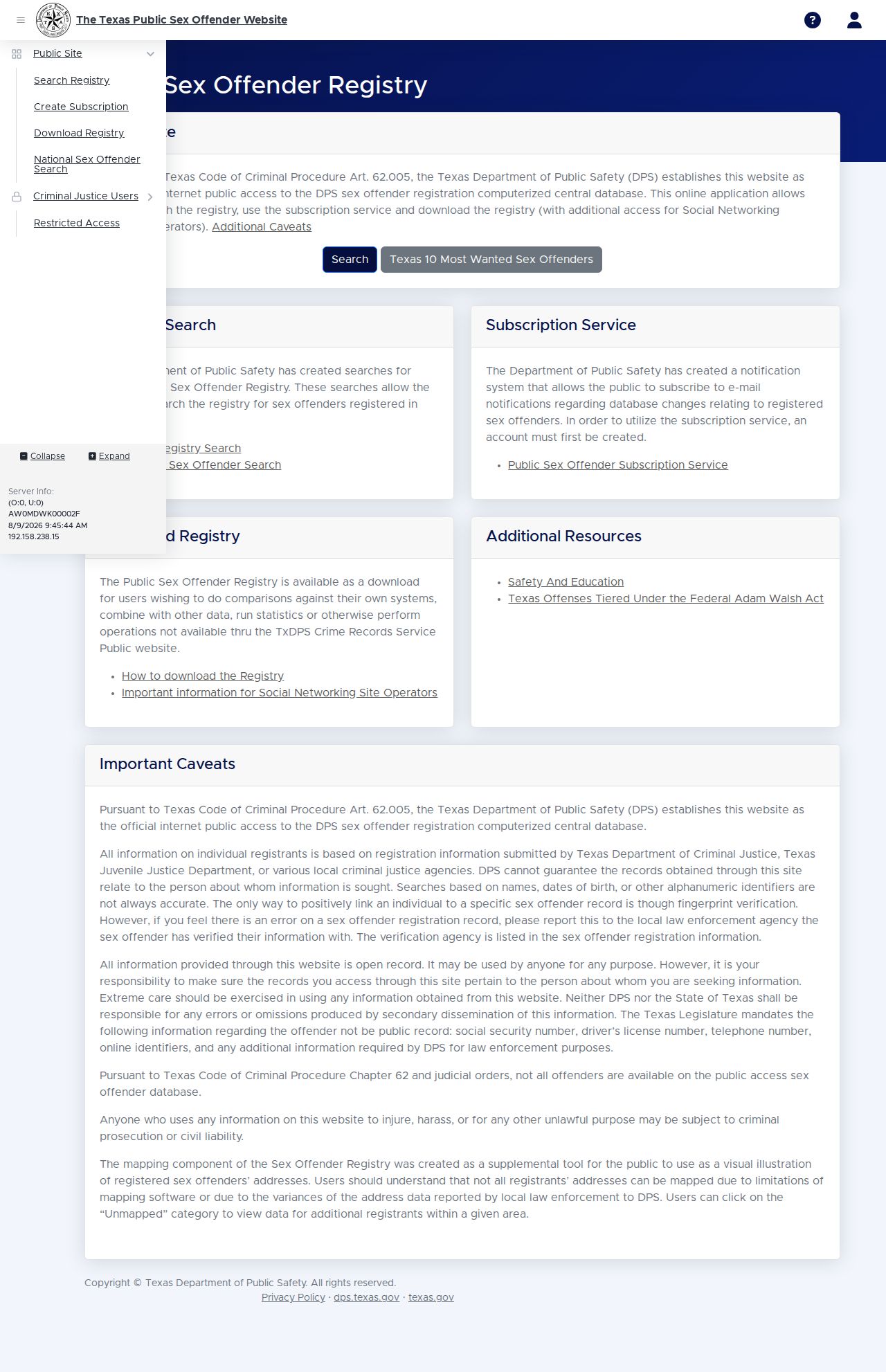
This state source should replace cached commercial maps, which may carry old addresses or incomplete profiles.
Searching the Texas Public Sex Offender Registry
Choose the route that fits what is known. A person search works best with a full name and middle name. A geographic search can cover Bosque County as a whole or narrow the result by address, city, ZIP code, and radius. Exact radius options can change in the live portal, so use the displayed choices rather than relying on an old instruction sheet.
- Open the DPS public registry and review its conditions of use.
- Select person search or geography search, then enter a name or choose Bosque County and the relevant place fields.
- Review the map or list, and compare enough identifiers to avoid a name-only match.
- Open the full profile and read the address, offense, risk, authority, verification, and ending-date details together.
| Field or control | Type | Required | Notes |
|---|---|---|---|
| Last, First, Middle Name | Text | For name route; middle optional | Use aliases shown in a known profile when relevant |
| Address | Text | No | Starting point for a geographic search |
| City | Text or selection | No | Narrows results within Bosque County |
| County | Dropdown | No | Select Bosque for a countywide result |
| ZIP Code | Text | No | Useful near city and county boundaries |
| Radius | Dropdown | With address route | Use current options shown by DPS |
| Map or List | View control | No | Changes presentation, not the legal meaning of a record |
Note: A zero-result address search may reflect spelling, radius, timing, or jurisdiction, so repeat the search with broader official fields.
Bosque Risk Levels Explained
Texas risk designations describe an assessed danger level. They are not the same as the federal SORNA tier system, and the displayed risk level does not by itself set the registration period. Readers should use the Texas terms shown on the profile and then consult the duration rules in Chapter 62.
- Level 1 Low
- Low danger and assessed as not likely to engage in criminal sexual conduct.
- Level 2 Moderate
- Moderate danger and assessed as possibly continuing such conduct.
- Level 3 High
- Serious danger and assessed as likely to continue such conduct.
- Civil Commitment
- A court-designated sexually violent predator under a separate intensive legal regime.
Do not turn a risk label into a claim about a person's present location or recent behavior. It is one field in a state registration record.
What a Registry Profile Shows
A public profile shows enough information for identification and safety awareness, but it is narrower than the full dataset held by DPS and local authorities. Public fields may include the registered address, a photo, physical description, offense and conviction data, risk level, current registration status, authority, and projected ending date or lifetime status.
| Name and Aliases | Identifies the registrant and other reported names. |
|---|---|
| Photo and Description | May show date of birth, sex, race, height, weight, hair, eyes, and identifying marks. |
| Registered Address | Shows the public residence or geographic information and should be read with its verification date. |
| Offense and Statute | Lists the reportable offense, conviction or adjudication details, and related jurisdiction. |
| Risk Level | Uses Texas Level 1, 2, 3, or civil-commitment terminology where applicable. |
| Registration Status | May show verification, registering authority, projected end date, or lifetime duty. |
The official Texas registry profile interface illustrates how those public fields are presented.
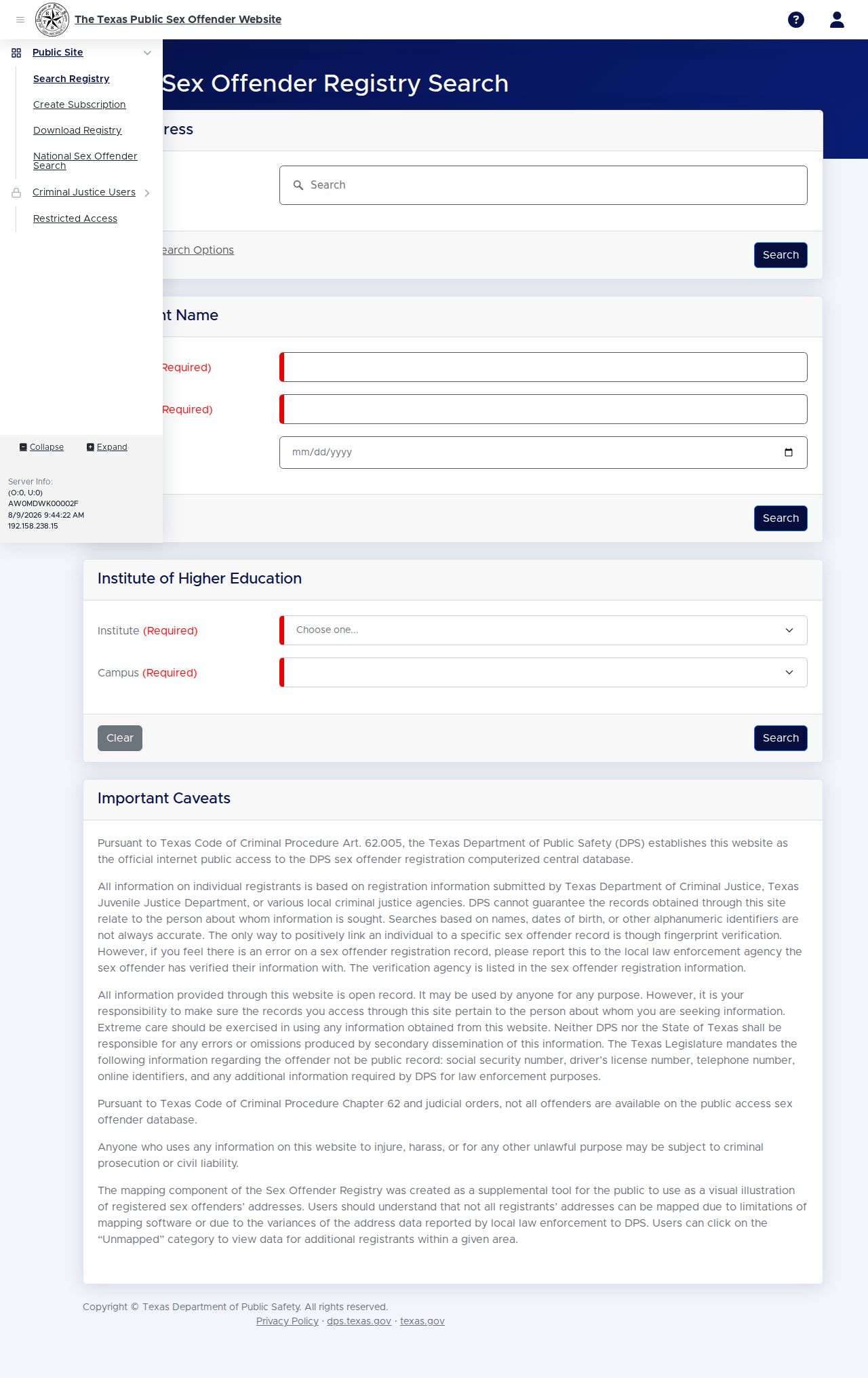
Use the profile as a dated official record and verify an apparent error with the listed registration authority.
Registration Requirements and Levels in Texas
Texas Code of Criminal Procedure Chapter 62 controls registration. Article 62.101 assigns lifetime registration to listed adult offenses. Other adult reportable cases generally continue for ten years after release or discharge. Ordinary juvenile adjudication continues until the later of ten years after disposition or completion. Exceptions require checking the actual statute and case.
| Texas category | General duration | General verification |
|---|---|---|
| Enumerated adult offenses | Lifetime | Usually annual, subject to statutory rules |
| Other adult reportable cases | Generally ten years after release or discharge | Usually annual |
| Ordinary juvenile adjudication | Later of ten years after disposition or completion | Usually annual, subject to juvenile orders |
| Two or more reportable convictions or adjudications | Duration follows the controlling offenses | Generally every 90 days |
| Civil commitment | Separate court-controlled regime | Intensive rules apply |
Risk level and duration answer different questions. A Level 1 label does not automatically mean ten years, and a Level 3 label does not alone establish lifetime registration.
Bosque Registry Dates and Notice
Texas registration began September 1, 1991 and expanded in stages. DPS states that, since September 1, 2005, the law reaches otherwise qualifying convictions or adjudications on or after September 1, 1970, even when the person was no longer in the Texas justice system by the late 1990s. Federal, military, foreign, and out-of-state cases can also trigger a Texas duty when substantially similar or required by the source jurisdiction.
For a Level 3 high-risk or civilly committed person moving into the immediate community, DPS provides bilingual postcard notification. Local authorities also send qualifying school notices and maintain registration data. No official Bosque-specific registry alert app or meeting schedule was found. DPS account subscriptions are the documented state alert option.
This history explains why a recent Bosque County address can be tied to an old case from elsewhere. It also explains why a missing name is not proof that no historical offense occurred.
Cross-State Bosque Offender Searches
Use the National Sex Offender Public Website when a search crosses state lines or a person has an uncertain border history. NSOPW federates participating state, territorial, and tribal public registries. It adds reach, but the originating jurisdiction remains the best source for the meaning and date of an entry.
Start with DPS for a Bosque County address. Then repeat the search in NSOPW when the known history reaches another state, federal system, military case, or tribal jurisdiction. Compare names, photographs, physical traits, and offense jurisdiction. Never merge two records solely because their names resemble each other.
The DPS criminal-history information page also explains why a public conviction name search is a different product from the sex offender registry.
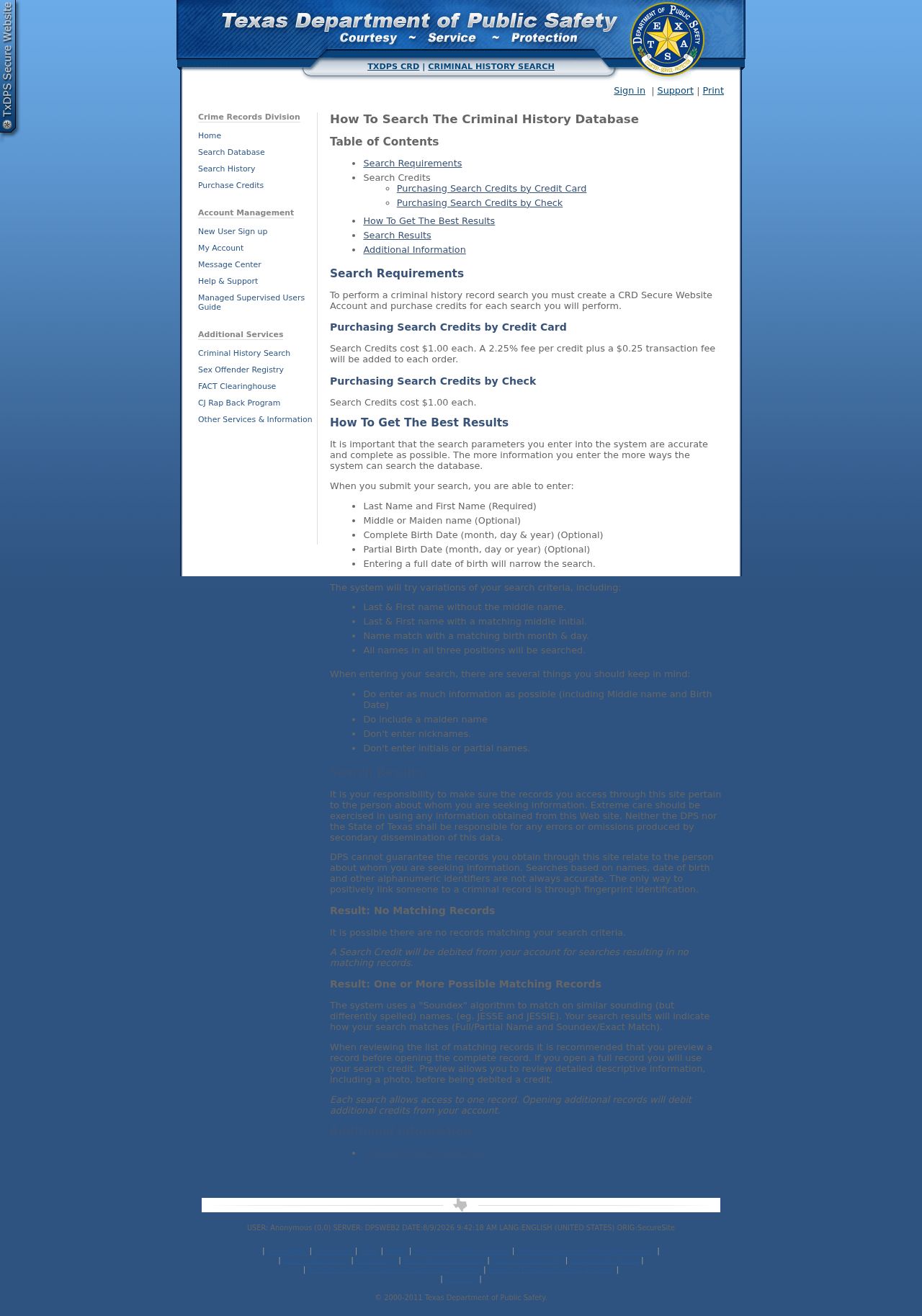
The distinction prevents readers from treating registry status as a complete Texas criminal history.
Lawful Use and Community Notification
Registry information supports personal and family safety, neighborhood awareness, and contact with the correct public authority. It does not prove that a listed person committed new misconduct. Do not confront someone, trespass, circulate protected household details, or treat proximity on a map as proof of presence at a site.
Report suspected noncompliance to the police department named as registration authority for a municipal address or to the Bosque County Sheriff for an unincorporated address. Failure to comply with registration duties is prosecuted under Article 62.102. Let the responsible agency check the facts.
Misuse is a crime: Texas Code of Criminal Procedure Article 62.0051 bars using registry information to injure, harass, or commit a criminal act against a registrant or household member. Misuse can lead to prosecution or civil liability.
Note: Texas has no single blanket statewide school or park distance rule based only on Chapter 62; supervision terms and local ordinances may differ.